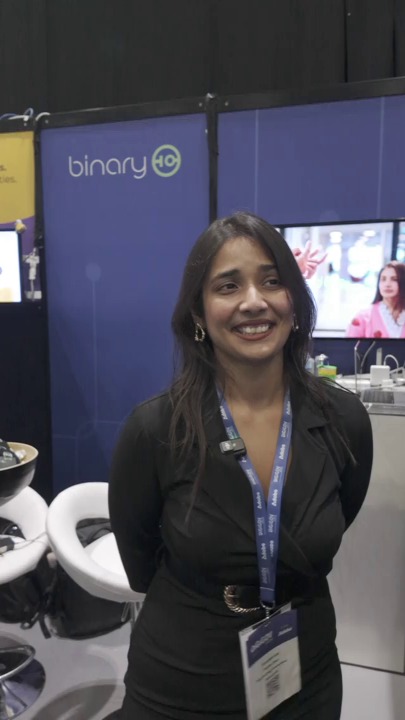

Annalisa of 2i explains how software assurance supports fast-moving businesses, why engineering with AI remains human-led, and what she enjoys about understanding customers’ problems.
Confidence while the business changes
A business can move quickly and still need reassurance that its digital services work as intended. That is the problem Annalisa describes in her conversation about 2i, a quality assurance and quality engineering business.
Her customers span different industries, from regulated sectors to retail, brands and fashion. The common requirement is trust in the platforms and applications they depend on. When a team makes changes, it needs confidence that those changes have not undermined the experience elsewhere.
2i’s quality assurance and software testing page adds detail to that company position: risk-based testing, evidence-based reporting and independent assessment of readiness for release. Those are descriptions of its services; Annalisa’s interview explains the customer need behind them.
AI supports the engineers doing the work
Annalisa describes two ways AI is affecting the business. Internally, she says the test team and engineers use it to accelerate their work, while retaining a human-led approach. She does not name a particular tool or give a measured time saving.
That distinction matters. Faster execution is one part of a testing process; deciding what to test, understanding a failure and assessing its business consequences still require expertise. The practical lesson is to examine how an AI tool fits into the team’s work, rather than treating the presence of AI as evidence of quality.
The edited Short focuses on this combination of speed and human expertise. The full conversation also touches on customers exploring AI, where Annalisa describes governance, assurance and guardrails as part of the support they need.
Assurance needs something concrete to assess
2i’s AI assurance overview describes assessment across accuracy, explainability, performance and robustness. These are the company’s stated dimensions, rather than findings about a particular client’s system.
They make the discussion more concrete. Does the output meet the intended need? Can the relevant people understand how a decision is reached? What happens under load or when an input is unexpected? An assurance conversation becomes more useful when it connects broad ambitions to conditions a team can investigate.
Starting with the customer’s problem
Asked what she enjoys about her role, Annalisa returns to talking with people: understanding what they need, where they are struggling and how a solution might help.
That is a useful place to begin a technical conversation. The quality requirement follows from the service people depend on and what could go wrong for them. Understanding that context gives engineers a clearer problem to solve and gives customers a clearer reason for the work.
The people in this story
Annalisa
Sales Executive · 2i
Annalisa works with customers at 2i, a quality assurance and quality engineering business. She discusses trust in digital platforms, the human expertise behind testing and understanding customer needs.
Visit 2i’s website ↗